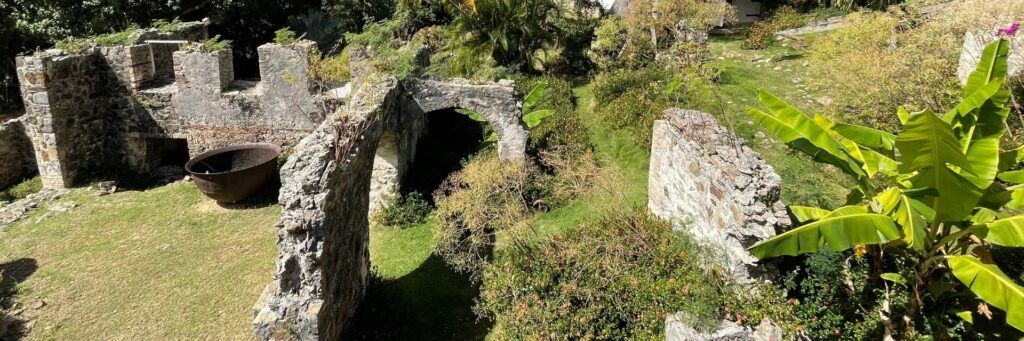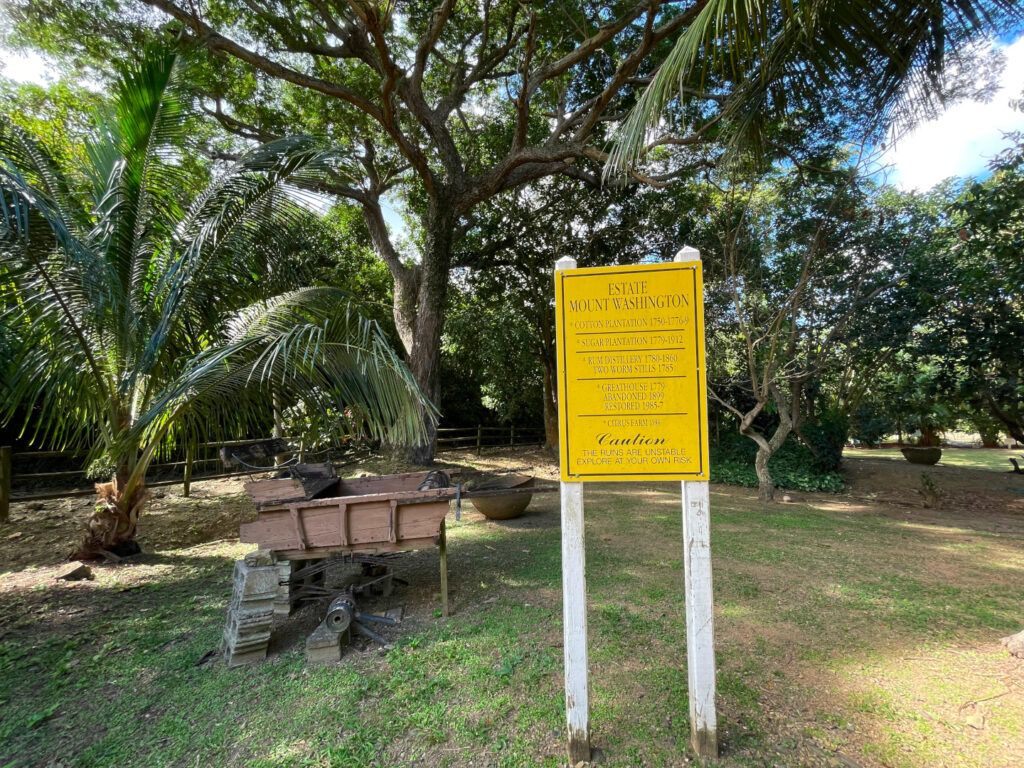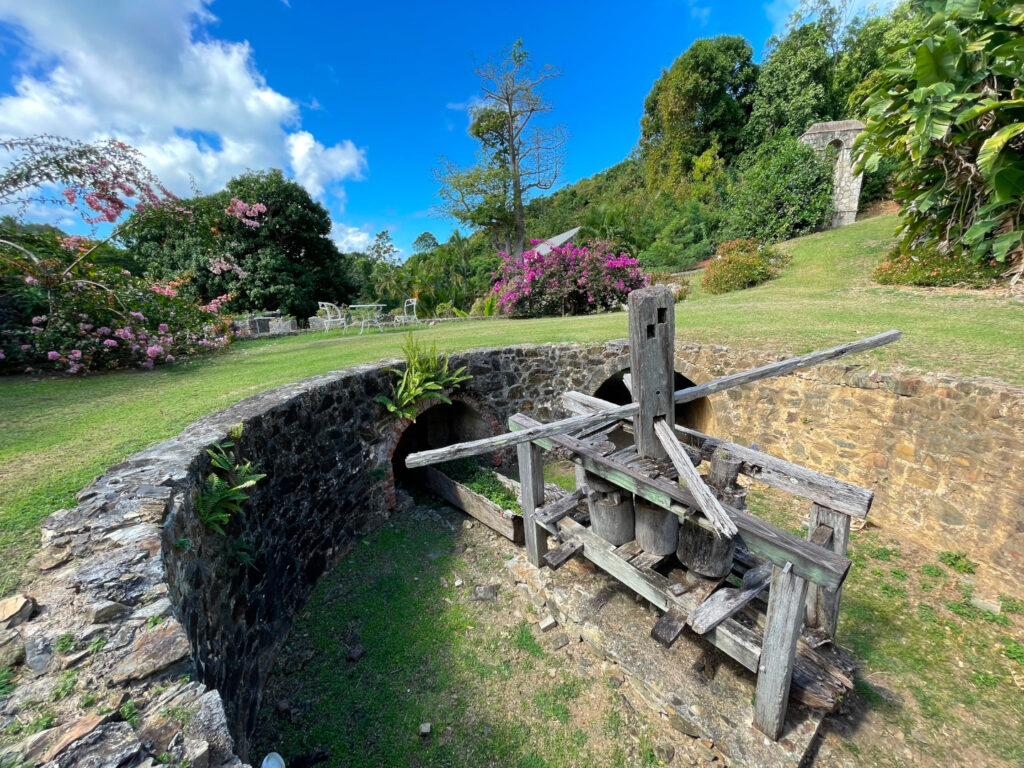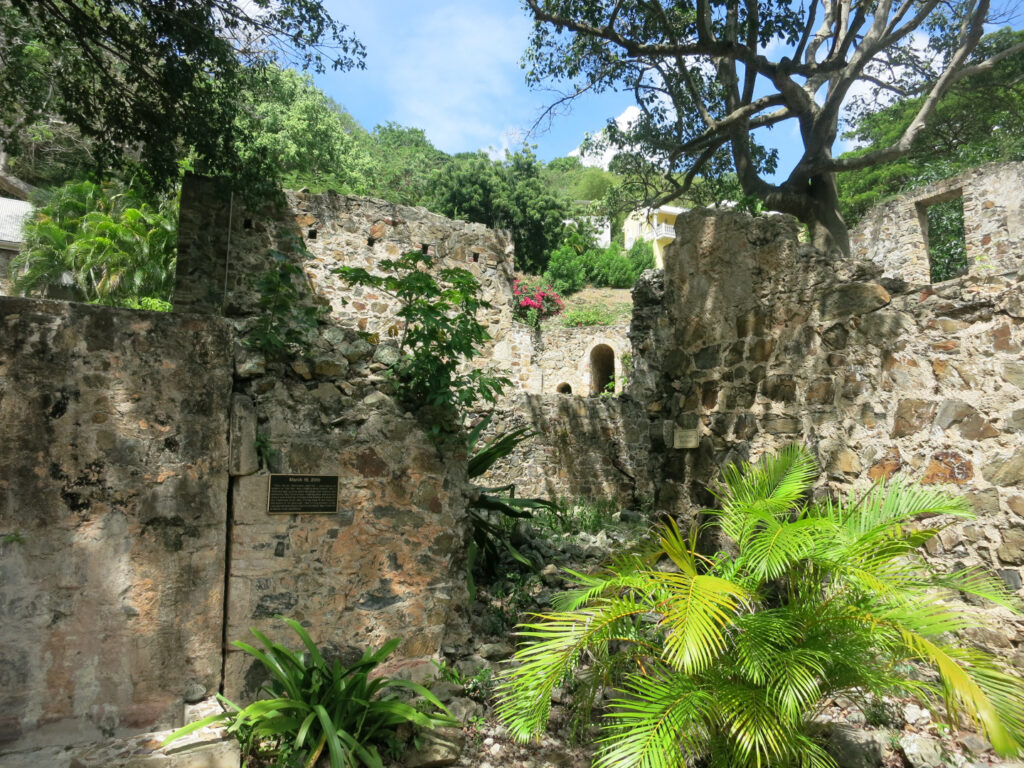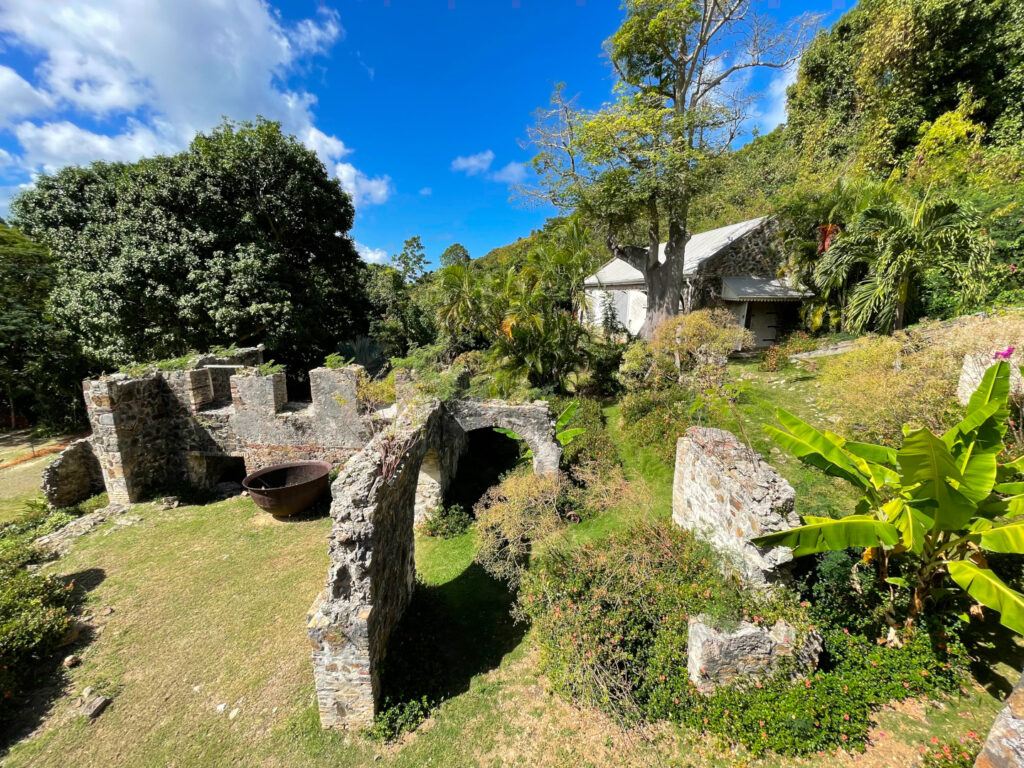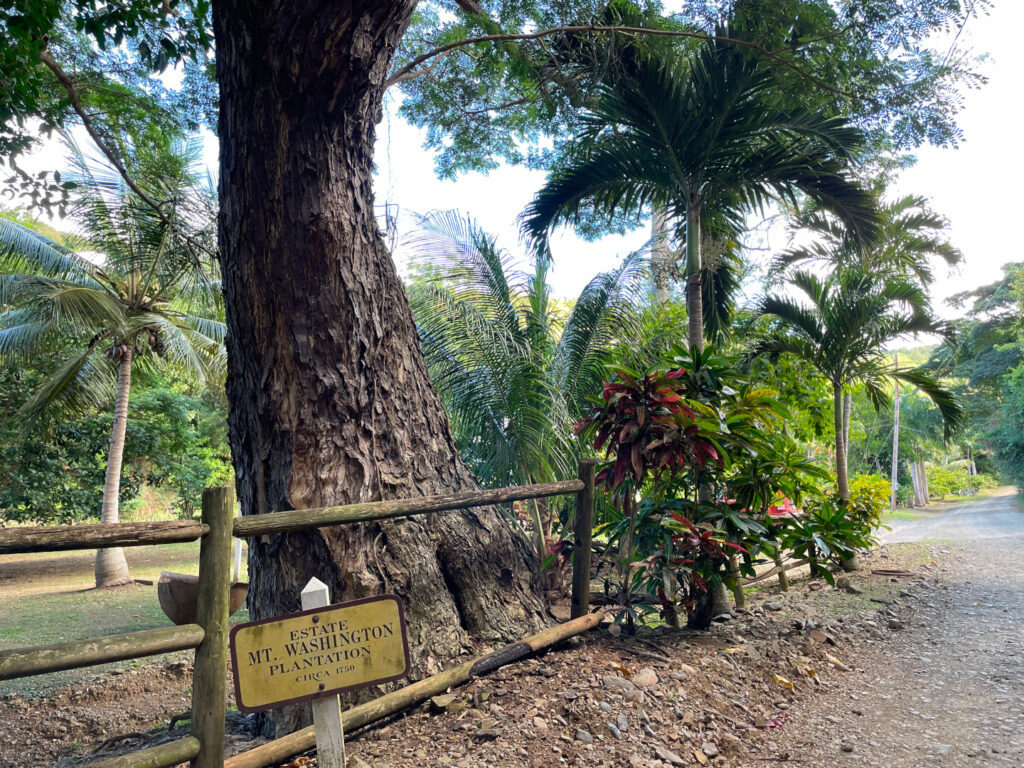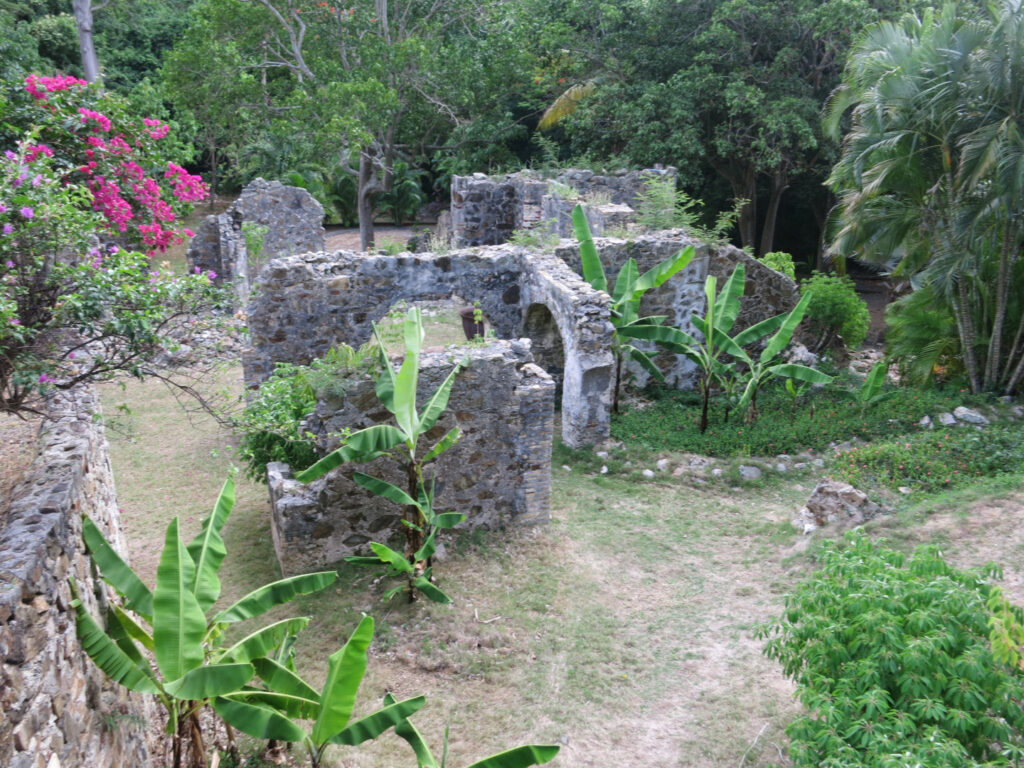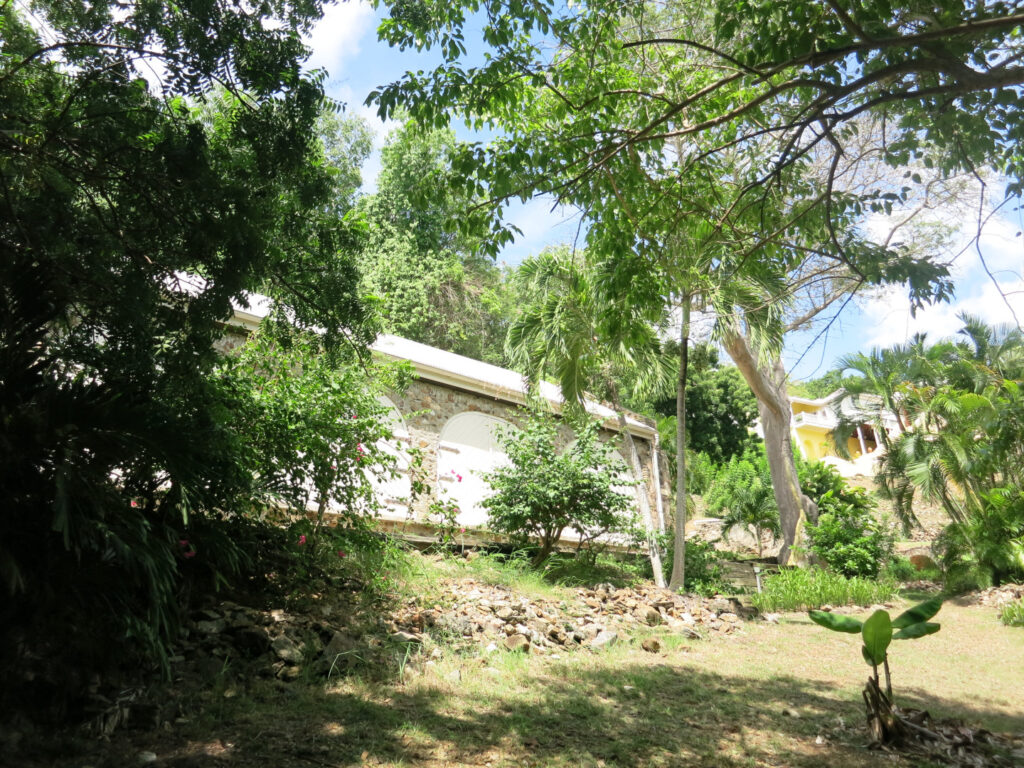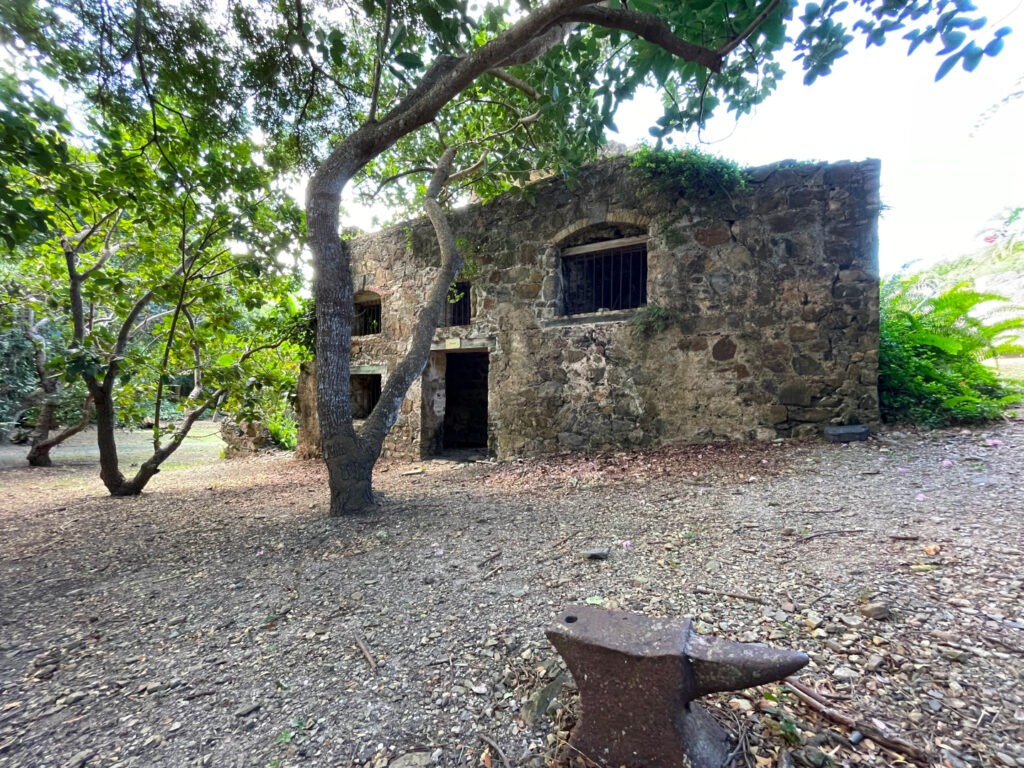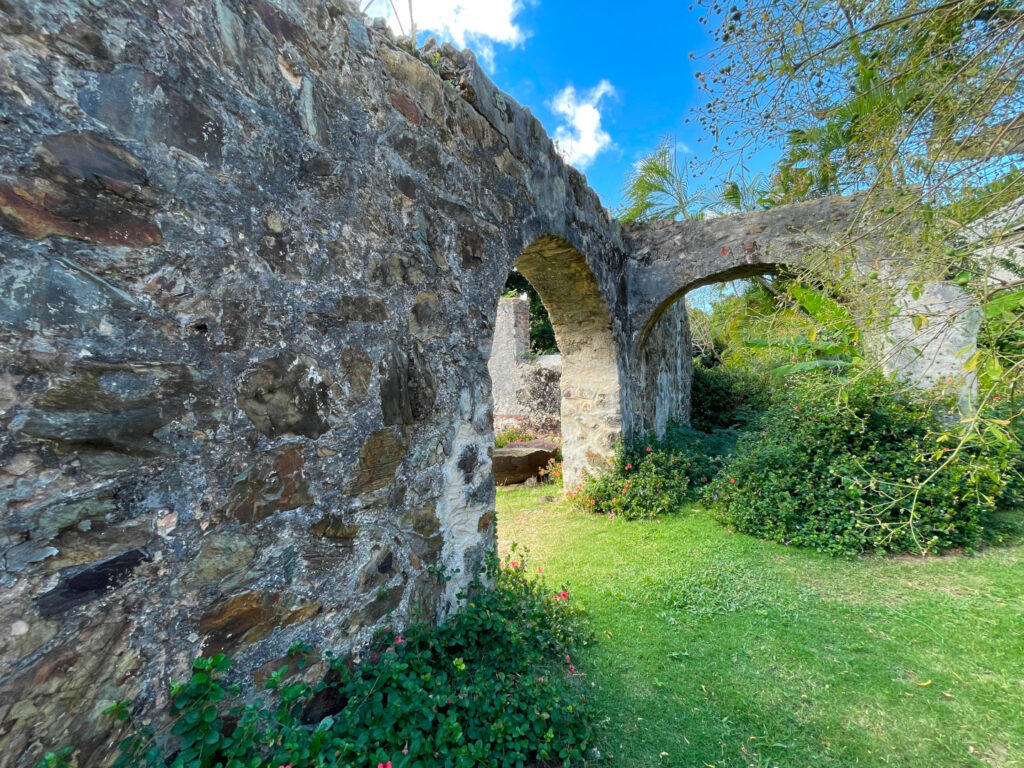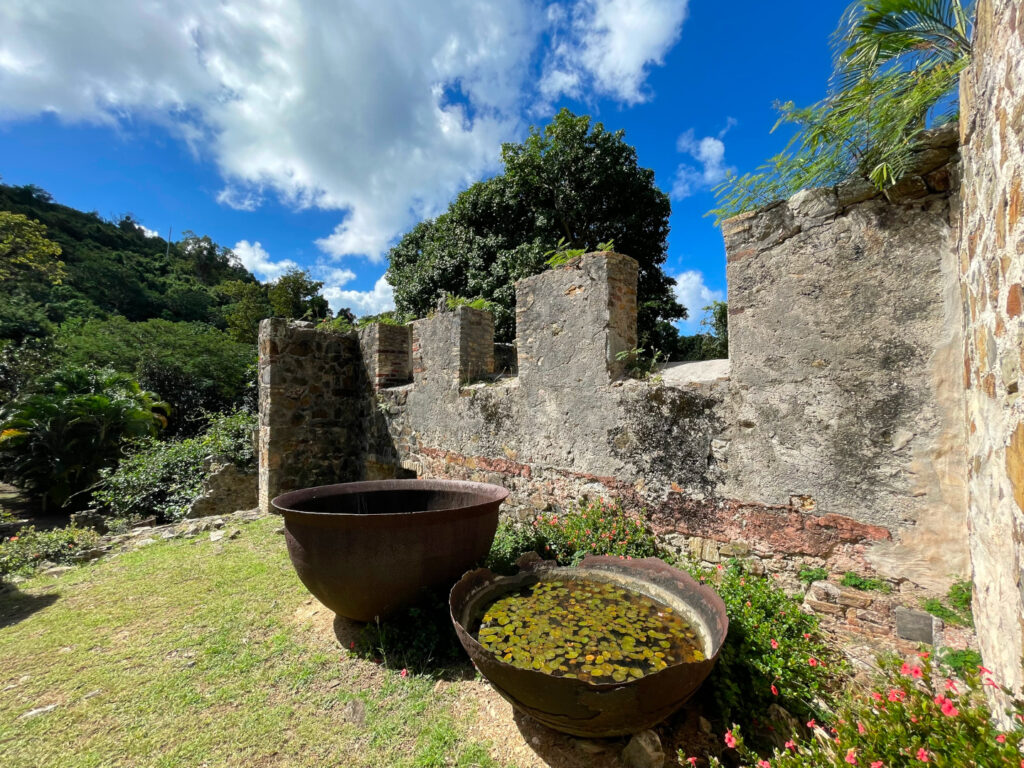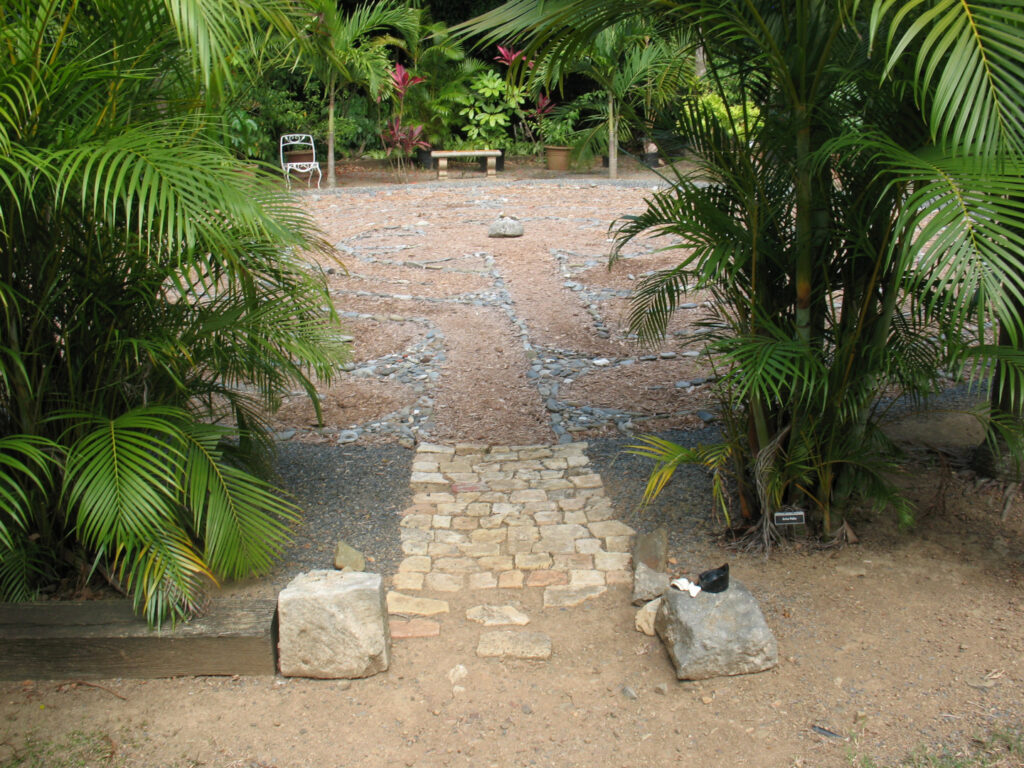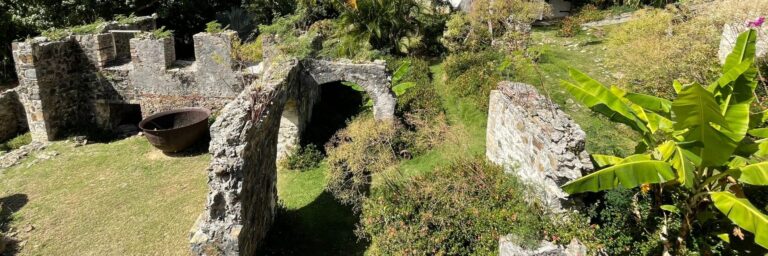
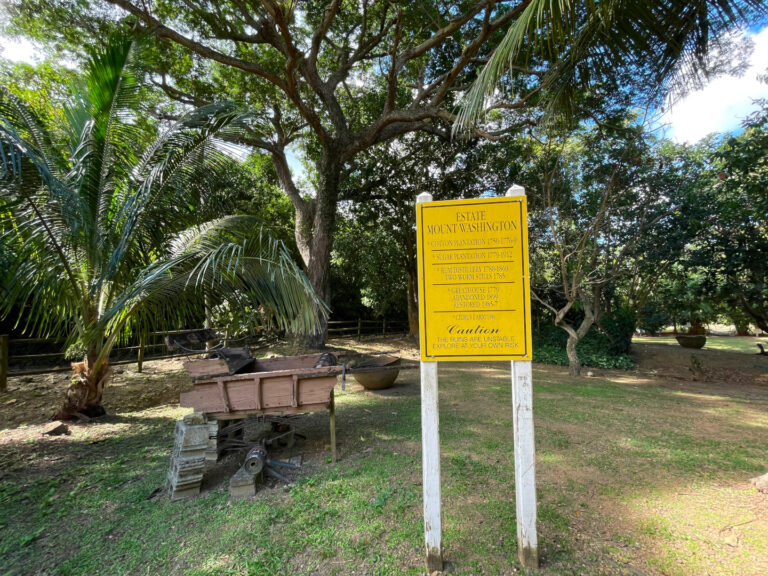
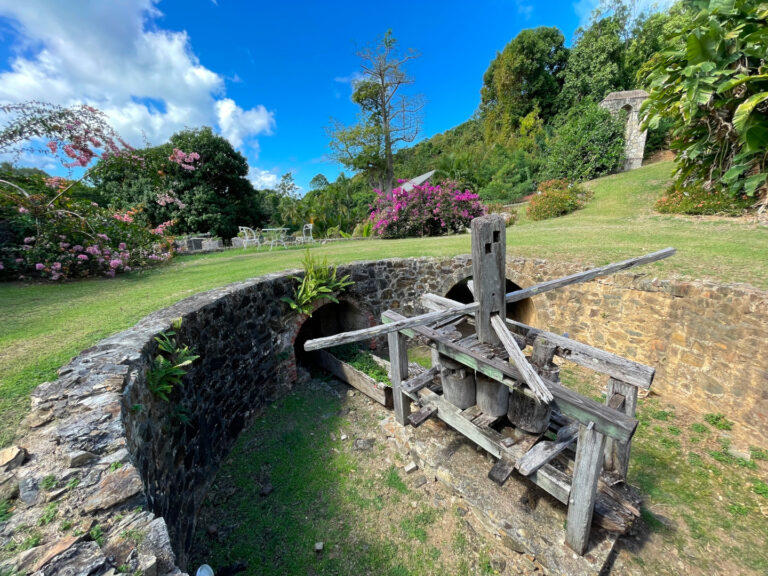
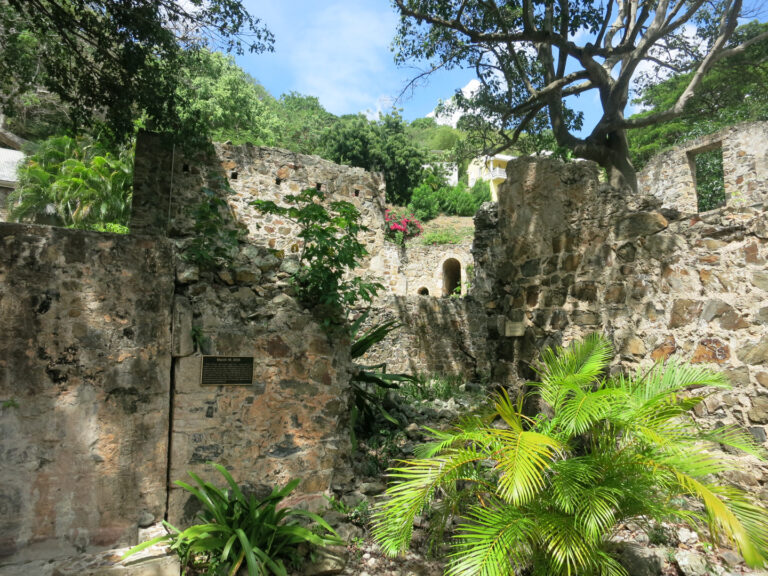
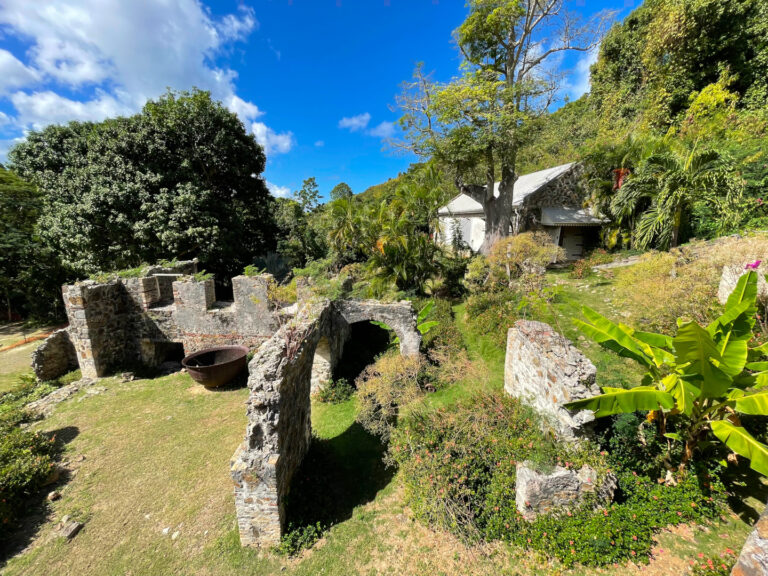
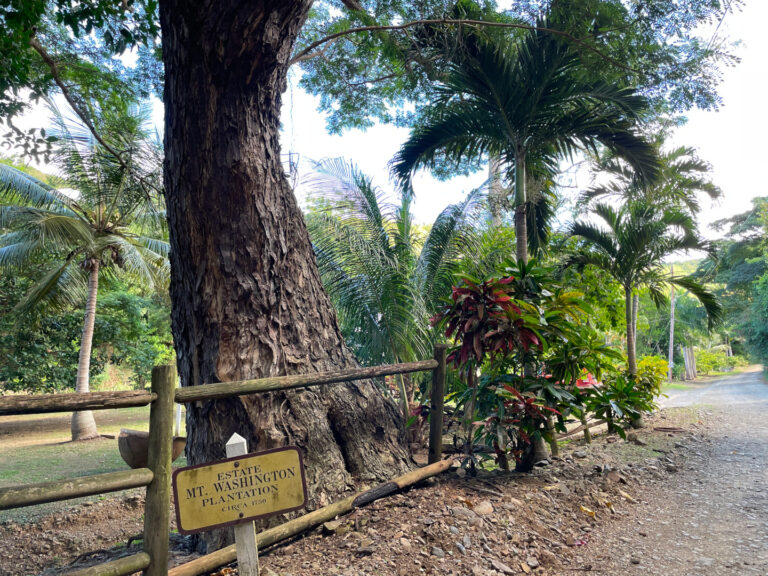
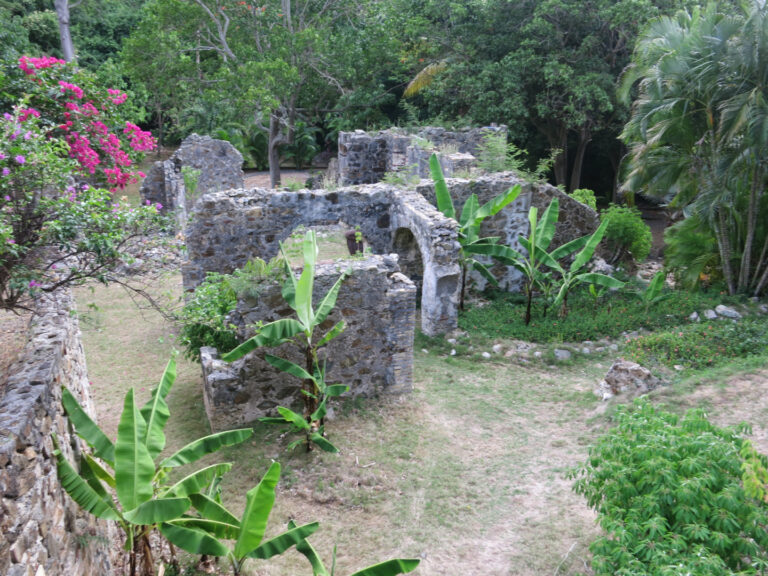
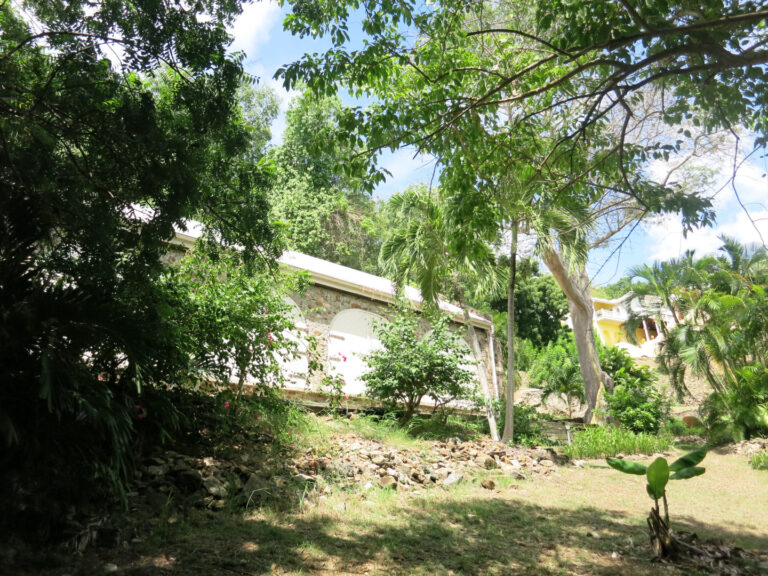
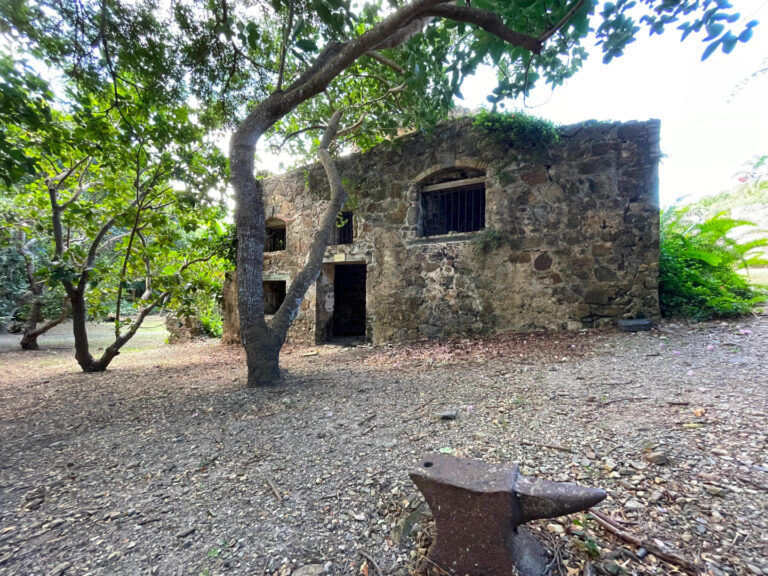
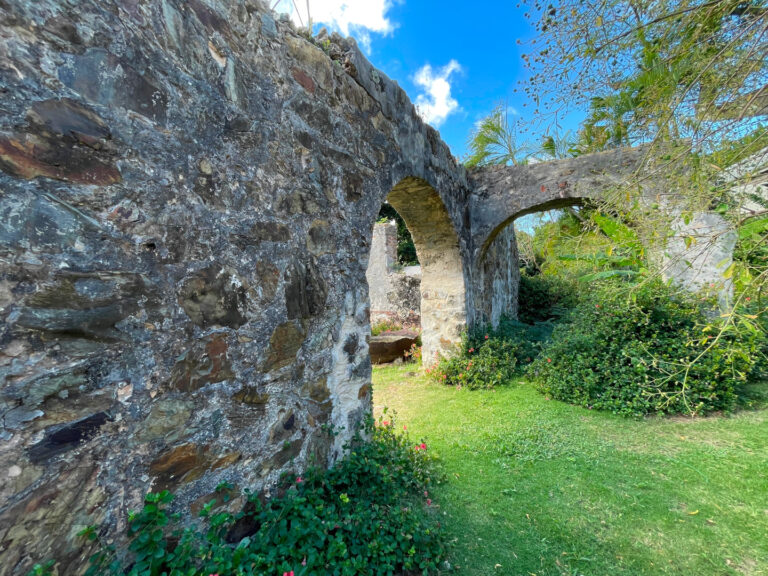
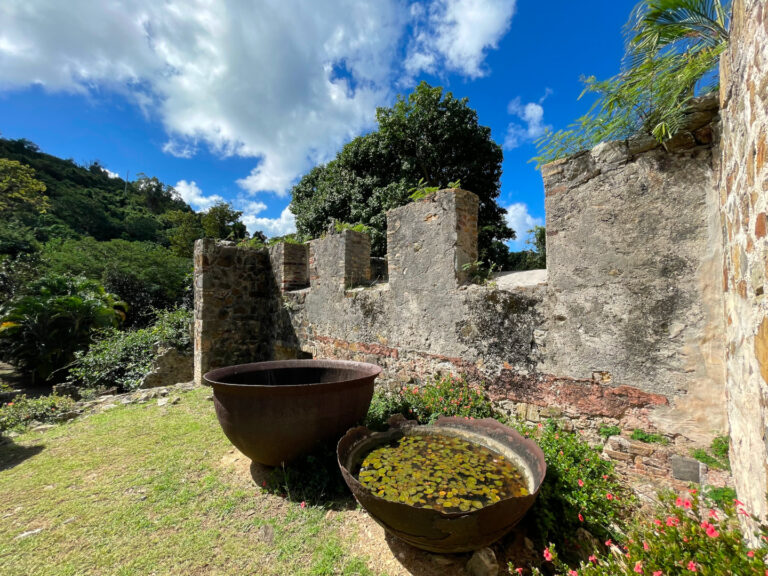
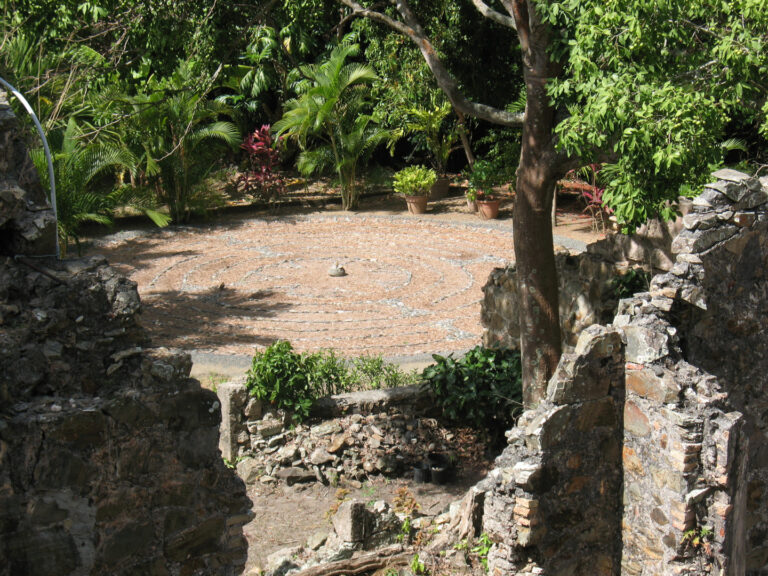
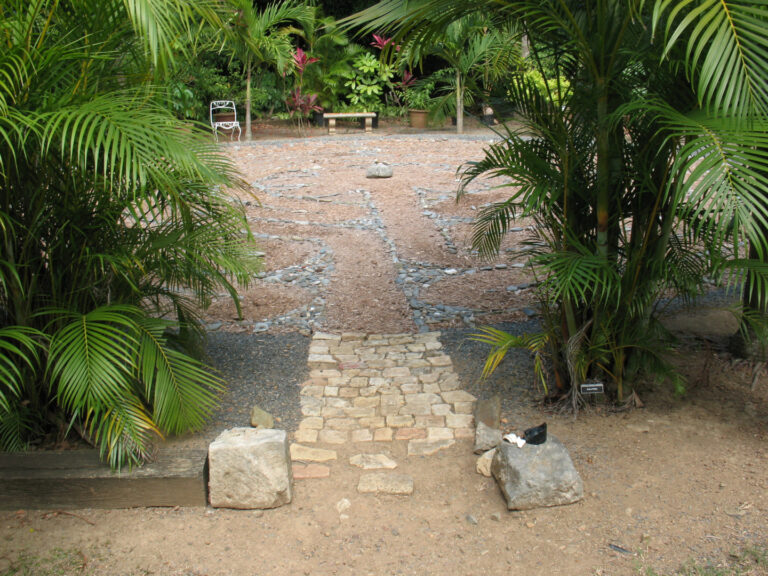
Nestled in the subtropical rainforest on the West End of St. Croix, lies Estate Mount Washington – one of St. Croix’s original Danish estates built in the 1700s. Much of the former plantation buildings lie in ruins. However, the greathouse was lovingly restored and is occupied by the current owners. Luckily, the owners kindly allow the public to walk amongst the ruins of this centuries-old sugar plantation. In addition, visitors can also enjoy the foliage-covered sitting areas and the labyrinth.
History of Estate Mount Washington
Originally a cotton plantation in the 1750s, the estate thrived during the early to mid-1800s when it converted to growing sugar. In its heyday, Estate Mount Washington was a 160 acre plantation. It consisted of the great house, a guest cottage, and a managers house. Other buildings included the Tranberg cottage, stables, an animal mill, a molasses cistern and rum factory, a sugar boiling shed, and a barrel storage and aging room, a dungeon, two water cisterns, three wells, a water mill, and a bell tower. There was also a plantation village of 17 cottages where the enslaved laborers lived.
Emancipation ended slavery on St. Croix in 1848. However, estate labor continued until sugar cultivation at Mount Washington was abandoned in the early 1900s. While the plantation village remained occupied until the 1930’s, a hurricane destroyed the great house in 1899. The estate was hit again in 1916. With their home in ruins, the occupants fled the plantation and the great house. The rainforest reclaimed the ruins of the great house, which were discovered buried on the grounds in June of 1984. Over the next two and a half years the jungle landscape was cleared away from the ruins. An archaeological study was completed. The great house was restored to its former grandeur and occupied beginning in 1986.
The Labyrinth
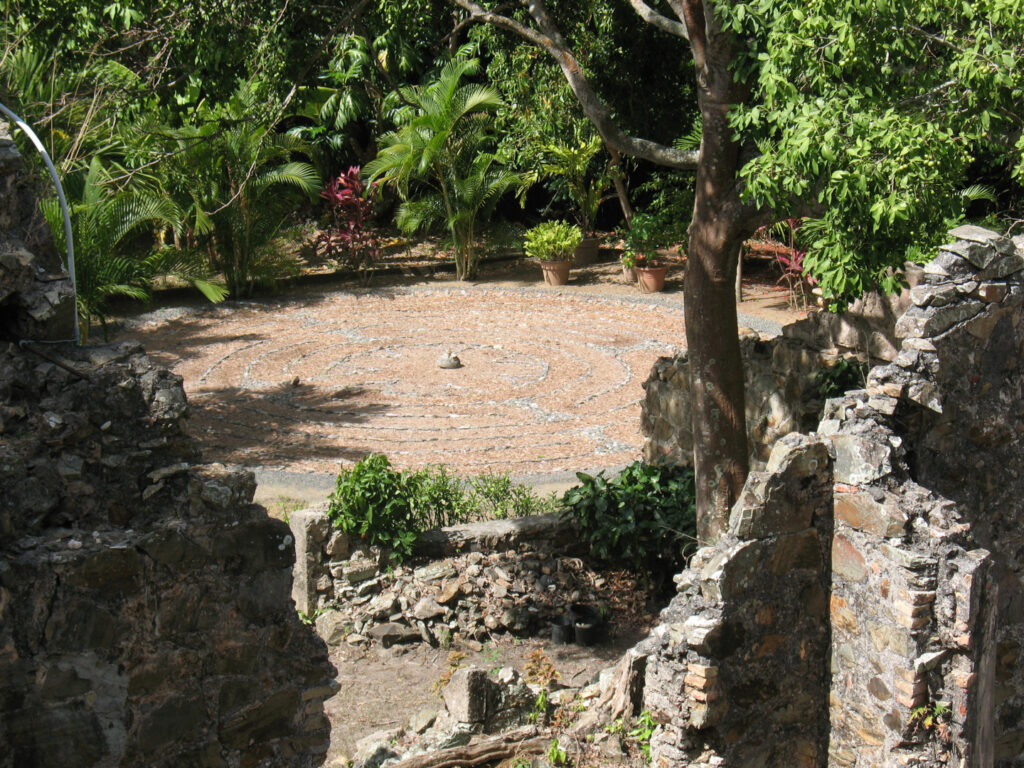
Be sure to see the labyrinth, designed and built by former owner Nancy Ayer. Set amongst the ruins, the labyrinth does not look out of place because it was created from local stones and coral, just like the surrounding ruins. The labyrinth is a spiral-like walking path for prayer and meditation, a metaphor for walking the path of life, as well as representing wholeness and unity. In addition, the labyrinth is a non-denominational and cross-cultural experience of self reflection. This particular labyrinth is known as a Chartres Labyrinth and the design is over 4,000 years old. There is only one entrance/exit to and from the labyrinth. As you enter the labyrinth, you follow the path which is carefully lined with stones. The route weaves you through a single, circuitous path to the center of the labyrinth. Then it leads you back out, returning you to where you began your journey.
Today, Estate Mount Washington is a privately owned historic property. Still, the owners have allowed visitors to wander the grounds respectfully during daylight hours. If you do visit, please be respectful to the property and its owners by not removing anything (including fruit from the trees). Also, do not leave any trash behind, and stay on the paths and ruins where there is signage.