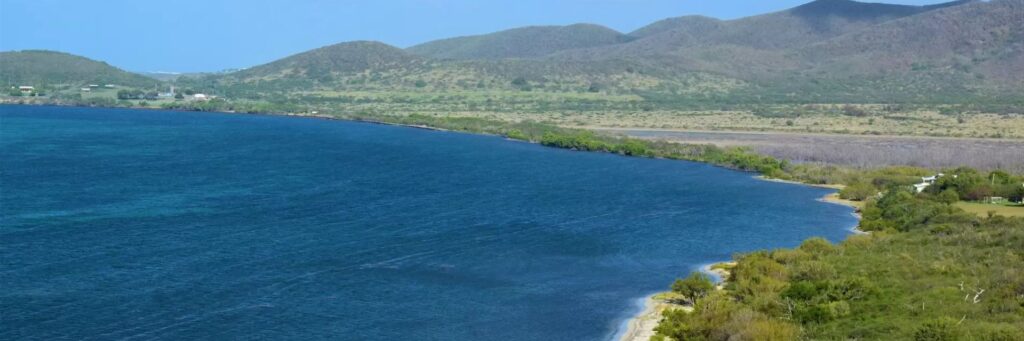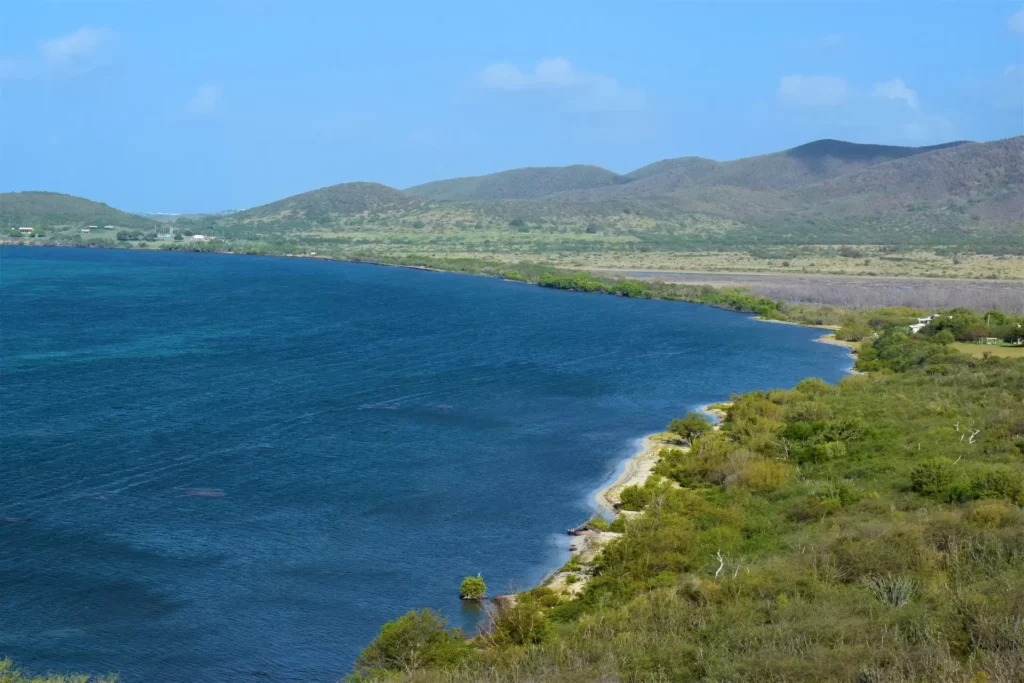
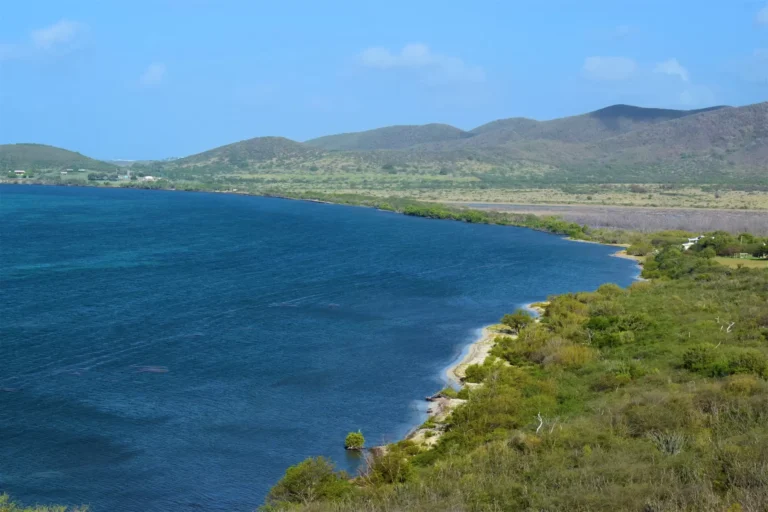
Great Pond is a 50 hectare mangrove-fringed, salt water lagoon situated on the southeastern shore of St. Croix. It began as a healthy wetland area. The wetland was made up of a mangrove lagoon near the mouth and a shallow basin near the center. It also included mudflats surrounded by coastal vegetation. Depending on the wet and dry seasons, the pond and its surrounding mudflats were historically used by Crucians to fish, crab and gather salt.
Great Pond Today
Over the last half century, the vegetation in the pond has changed considerably. Mangroves expanded in coverage in the early 1990s, adding small islands of mangrove trees to what had been an open-water system. In late 2015, a substantial die-off of mangroves in the interior of the pond occurred, resulting in the grey landscape you see today. The mangrove lined channel which once supplied the pond with its saltwater input has also closed up. This was due to sand accumulation, and buildup of other organic debris.
The Department of Planning and Natural Resources (DPNR) is aware of and monitoring the condition of Great Pond. They financed a study to describe the biotic and physical changes in the Pond. They have been seeking funding opportunities to pursue restoration of the Pond.
Bird Area
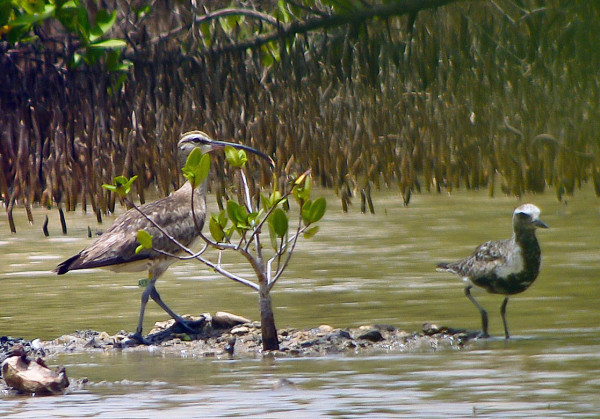
A 64 hectare area, encompassing the lagoon and its immediate wetland surrounds, has been recognised as an Important Bird Area (IBA) by BirdLife International. This is because it supports populations of white-crowned pigeons, green-throated caribs, Antillean crested hummingbirds and Caribbean elaenias. It also supports a breeding colony of least terns.