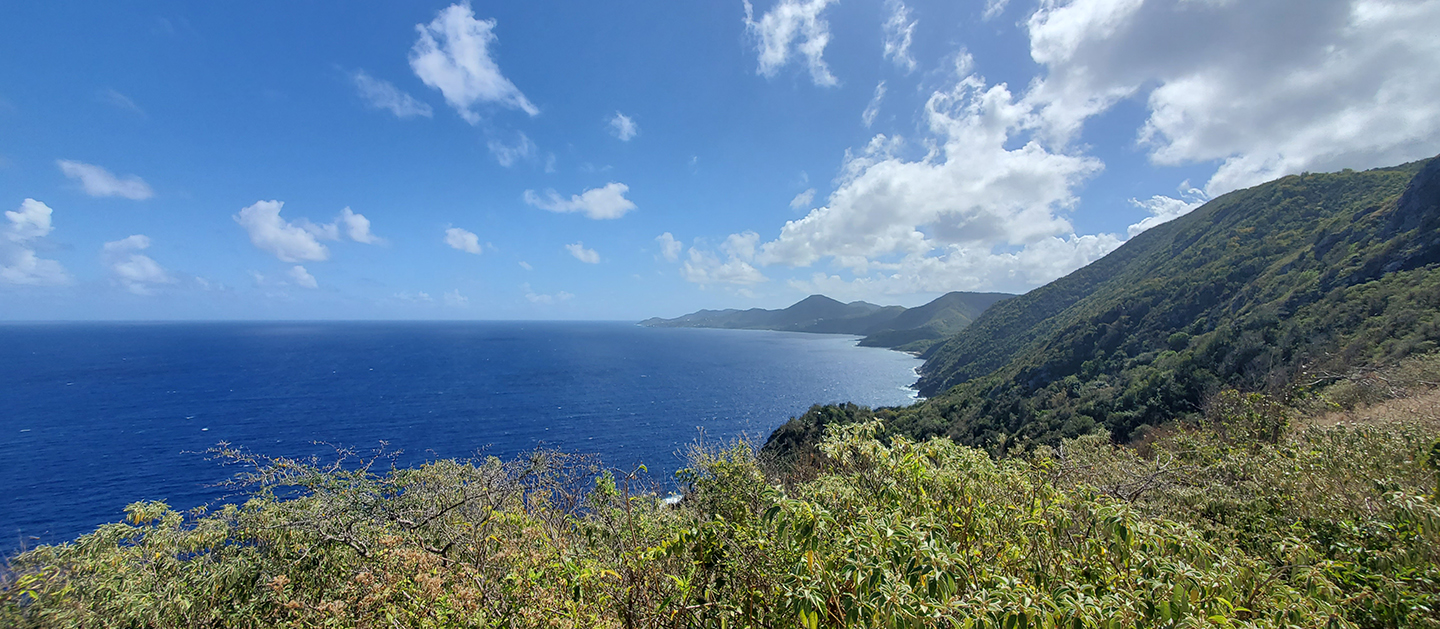
St. Croix is home to an incredible variety of trees and fruit, shaped by the island’s multicultural history and diverse landscapes. From towering rainforest giants on the west end to coconut palms along the shoreline, the island’s scenery is filled with both native Caribbean species and trees introduced from Africa, Central and South America, and beyond.
Many trees on St. Croix are more than just beautiful. Some provide fruit, others have traditional medicinal uses, and many play an important role in island life and culture. Keep an eye out as you explore — you may be standing beneath a centuries-old shade tree or passing one with a fascinating history.
TREES
African Tulip Tree
One of the island’s most eye-catching flowering trees, the African tulip tree bursts into fiery red-orange blooms that brighten roadsides and hillsides across St. Croix. Sometimes called the “fire tree,” its large bell-shaped flowers collect rainwater, making them popular with birds, and local children have long enjoyed squeezing water from unopened buds. Originally from Africa, parts of the tree have traditionally been used for carving, medicine, and even drum-making.
Calabash Tree
The calabash tree is best known for its large, round gourd-like fruit, which has been used throughout the Caribbean for centuries. Once dried and hollowed, the hard shells become bowls, cups, musical instruments, and bird feeders. Its unusual flowers grow directly from the trunk and branches, while traditional remedies have used parts of the tree for respiratory and stomach ailments.
Kapok Tree
Towering above the rainforest, the kapok tree is one of St. Croix’s giants and can grow to impressive heights. Known locally as the “jumbie tree,” it produces fluffy cotton-like fibers that drift through the air when seed pods burst open. Historically, these fibers were used for pillows and life preservers, while the lightweight wood was crafted into dugout canoes.
Mahogany
Majestic and wide-spreading, mahogany trees are valued for both their beauty and prized hardwood. Their rich red wood has long been used for furniture, boats, and carving, while the trees themselves provide welcome shade across the island. Traditionally, teas and remedies made from bark and leaves were also used to treat fever and colds.
Manchineel
Often called the “little apple of death,” the manchineel is one of the most poisonous trees in the world and should never be touched. Found near beaches and shorelines, even its sap can irritate skin, while standing beneath it during rain may cause blistering. Despite its dangers, the tree plays an important role in preventing beach erosion by stabilizing sandy coastlines.
Powder Puff Tree
This cheerful ornamental tree produces soft, fluffy blooms that look just like colorful powder puffs. Flowering in shades of red, pink, or white, it attracts butterflies, bees, and hummingbirds, making it a favorite in gardens around St. Croix.
Sandbox Tree
Known locally as “Monkey-No-Climb,” the sandbox tree is easy to recognize thanks to the sharp spikes covering its trunk. Found in rainforest areas, its seed pods famously burst open with a loud crack, launching seeds across the forest floor. While fascinating to see, parts of the tree can be toxic and should be admired from a distance.
Seaside Mahoe
Common along the coastline, the seaside mahoe is a hardy tree with heart-shaped leaves and hibiscus-like yellow flowers that turn red before falling. Its salt tolerance makes it ideal for coastal areas, while its wood has traditionally been used for furniture, bowls, and musical instruments.
Tan Tan
Tan tan grows almost everywhere on St. Croix and is known for its fast growth and thick coverage. While it helps improve soil quality by adding nitrogen, it can spread aggressively and crowd out native plants. Its small white flowers bloom year-round, making it a familiar sight across the island.
Turpentine Tree (Tourist Tree)
Locals affectionately call this the “tourist tree” because of its peeling red bark, which resembles sunburned skin. Also known as gumbo-limbo, it is common across St. Croix and has long been valued for medicinal uses, including remedies for rashes, bites, and sunburn.
FRUIT